
Best Cameras Under $1,100 for Travel Photographers
About the Author: Susan & Doug

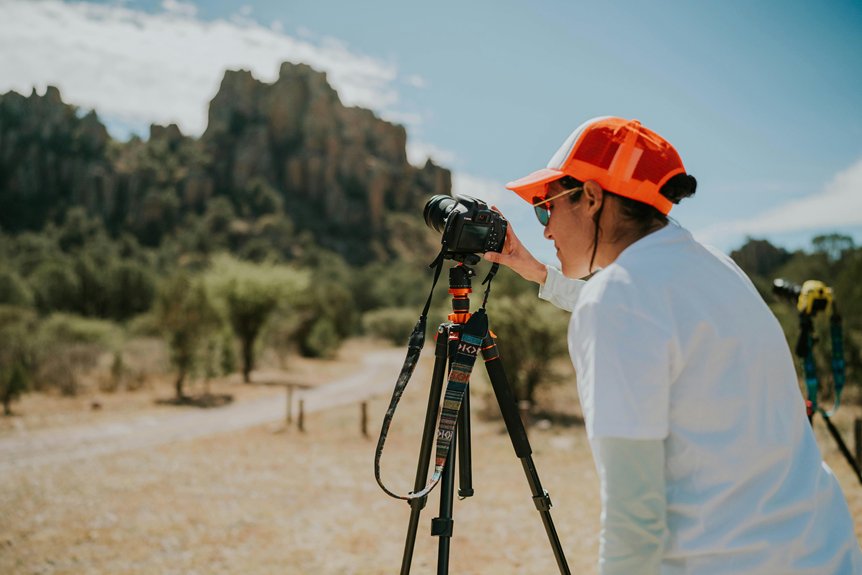
When a photographer packed a Nikon Z50 II through Southeast Asia last monsoon season, it handled humidity, dust, and low-light temple interiors without missing a beat. Finding the right travel camera under 1,100 isn’t about chasing specs — it’s about matching gear to how you truly shoot. We’ve tested these cameras across real conditions, not just studio benchmarks. What we found might change how you think about value in travel photography.
Quick Answer
- The Nikon Z50 II is the top overall travel camera, offering a 20.9MP APS-C sensor, reliable autofocus, and 4K video under $1,100.
- Large-sensor mirrorless cameras like the Fujifilm X-M5 deliver superior image quality, versatility, and advanced video capabilities for travel photographers.
- The Canon PowerShot V1 delivers 1-inch sensor quality in a pocketable body with 4K video and a flip screen, perfect for travel vloggers and content creators under $850.
- Fast autofocus with subject tracking, image stabilization, and rugged compact builds are essential features to prioritize in a travel camera.
- All recommended cameras balance affordability with advanced features, making high-quality travel photography accessible across various skill levels and shooting styles.
| Camera | Best For | Sensor | Price | Buy |
|---|---|---|---|---|
| Nikon Z50 II | Best overall travel camera | 20.9MP APS-C | ~$1,099 | View on Amazon |
| Canon PowerShot V1 | Best compact for travel & vlogging | 1-inch sensor | ~$849 | View on Amazon |
| Sony a6100 | Best budget mirrorless | 24MP APS-C | ~$830 | View on Amazon |
| Fujifilm X-M5 | Best for content creators | 26MP APS-C | ~$999 | View on Amazon |
* Prices approximate. Check Amazon for current pricing. Affiliate links — we earn a small commission at no extra cost to you.
The Features That Actually Matter in a Travel Camera Under $1,100
When shopping for a travel camera under $1,100, we don’t need to compromise on the features that genuinely move the needle. Start with a large sensor — APS-C or Micro Four Thirds — since it handles mixed lighting honestly.
Next, prioritize a fast autofocus system with subject tracking and eye detection; fleeting moments don’t wait. For content creators, 4K video with image stabilization is non-negotiable.
Don’t overlook build quality — a rugged, compact design survives long travel days without weighing you down. A versatile zoom lens eliminates the need for constant lens swapping mid-shoot.
Good battery life keeps you shooting through packed itineraries without that sinking “low battery” feeling at the worst possible moment. Finally, intuitive manual controls let you react quickly when the light changes or something unexpected unfolds in front of you.
These aren’t luxury extras — they’re the baseline for a camera that actually holds up when you’re out there in the field.
Best Overall Travel Camera: Nikon Z50 II
After weighing everything that matters in a travel camera under $1,100, the Nikon Z50 II earns the top spot. Its 20.9MP APS-C sensor consistently delivers sharp, detailed images across varied travel scenes — from dim alleyways to bright coastlines.
The autofocus system tracks nine subject types reliably, so you’re not missing moments while adjusting settings.
We appreciate the ergonomic design for long shooting days, and the twin command dials keep controls intuitive without a steep learning curve.
The in-camera filters let you share polished shots immediately — no editing required.
For content creation, 4K video with Log and HLG modes gives this compact camera genuine versatility.
It’s the kind of camera that quietly impresses you the more you shoot with it — and for the price, that’s saying something.
The Nikon Z50 II makes travel photography consistently rewarding, and honestly, that’s exactly what you want when you’re navigating new places with a camera around your neck. For full technical specifications see the official Nikon Z50 II manual.
Best Compact Travel Camera: Canon PowerShot V1
The Canon PowerShot V1 is Canon’s newest compact camera and at $849 it’s one of the best-value travel cameras available right now. It packs a 1-inch sensor behind an ultra-wide zoom lens — a combination that handles everything from tight market scenes to sweeping architecture shots without changing glass.
The 4K video with a fully articulating flip screen makes it an excellent choice for vloggers and content creators who want high image quality without carrying a full mirrorless system. Built-in stabilization keeps footage smooth even when things get chaotic on the road.
For travelers who want serious image quality in a truly pocketable body the Canon PowerShot V1 is our top compact pick right now — and unlike some compact cameras in this category, it’s actually in stock at its regular price.
Best Budget Travel Camera: Sony a6100
The Canon PowerShot V1 is our top compact pick, but if you’re willing to carry a slightly larger body and swap lenses, the Sony a6100 delivers considerably more shooting flexibility at around $849.
Its 24MP APS-C sensor produces sharp, detailed images across a wide range of lighting conditions, and the Real-time Tracking Eye AF locks onto subjects reliably — whether you’re photographing people or wildlife.
As a vlogging camera, it covers the basics well: 4K video with full pixel readout, a tilting LCD, and a built-in EVF. Honestly, the autofocus blew us away for the price.
As a lightweight camera with interchangeable lenses, this budget camera punches well above its category — and for serious photographers, it’s become our go-to recommendation when someone wants a practical, high-image-quality travel camera without breaking the bank.
Best for Content Creators: Fujifilm X-M5
If you’re a content creator who shoots primarily for social media or YouTube, the Fujifilm X-M5 is worth taking seriously. This compact camera packs serious capability into a travel-friendly body.
Key highlights include:
- 26MP APS-C sensor with AI autofocus for sharp, detailed stills
- 4K video up to 60p plus 6.2K open-gate recording
- Fully articulated LCD for flexible vlogging angles
- Dedicated dials for Film Simulations and JPEG colors, giving you direct creative control
- Lightweight design built for travel photography and daily carry
We’ll be honest — the missing viewfinder and occasionally inconsistent AI autofocus are real trade-offs that you’ll feel in the field.
But for social media-focused shooters wanting cinematic footage and beautiful JPEGs straight from camera, we recommend the Fujifilm X-M5 without hesitation.
The value it delivers under $1100 is genuinely hard to beat.
Should You Buy New or Used?
When you’re working within a $1,100 budget, buying new gives you peace of mind with a full warranty and a camera straight out of the box, but you’ll pay a premium for that assurance.
The used market, particularly through trusted resellers like MPB or KEH, can stretch your budget considerably, putting higher-end models within reach that would otherwise sit above your price ceiling.
We recommend weighing your risk tolerance honestly—if a minor cosmetic scratch won’t bother you, buying used is often the smarter financial move.
New Camera Benefits Explained
Buying new has real advantages worth thinking about before you commit to a budget. A new camera delivers reliability and peace of mind that used gear simply can’t match at the same level.
Here’s what comes with a new release:
- Full manufacturer warranty protecting against defects from day one
- Latest features and cutting-edge technology built into the hardware
- Firmware updates supported long-term by the manufacturer
- No hidden wear from previous owners or unknown usage history
- Direct support channels if something goes wrong post-purchase
We’ve seen travelers regret skipping warranty coverage the moment something fails abroad. When you’re deep into a trip, that full manufacturer backing genuinely makes a difference.
New cameras cost more upfront, but the benefits often justify the investment for serious travel photographers.
Used Market Smart Picks
The used market deserves serious consideration, especially when platforms like MPB and KEH back their inventory with warranties and graded condition ratings.
We’ve seen travel photographers score second-hand bodies like the Sony A7III or Nikon Z50 II at 30–50% below retail, making genuinely high-quality gear suddenly budget-friendly.
That said, the used market rewards careful buyers. We recommend verifying gear condition ratings, checking shutter counts, and confirming lens mount compatibility before committing.
Reputable platforms remove much of that risk, but doing your homework still matters.
For experienced shooters, these affordable options unlock advanced features that’d otherwise exceed a $1100 budget.
Used cameras aren’t a compromise—they’re a smart strategy.
In travel photography, keeping costs down without sacrificing performance is always the right move.
Which Travel Camera Matches Your Shooting Style
Choosing the right travel camera comes down to how you truly shoot, not just what looks good on a spec sheet. We’ve found that matching camera to style dramatically improves results in the field.
Here’s how we break it down:
- Street photographers: The Sony a6100 delivers discreet APS-C performance in a compact body perfect for candid street shots.
- Vloggers/creators: The Canon PowerShot V1 is hard to beat — 4K, flip screen, and 1-inch sensor quality in a jacket pocket.
- Landscape shooters: The Nikon Z50 II gives you high-resolution APS-C performance with excellent lens control for wide scenes.
- Low-light shooters: The Fujifilm X-M5 with its 26MP sensor and Film Simulations excels in tricky mixed lighting conditions.
- Casual travelers: The Canon PowerShot V1 hits the sweet spot between simplicity and image quality without overwhelming you with controls.
Frequently Asked Questions
What Accessories Are Essential for Travel Photographers Using These Cameras?
Like a traveler’s compass guiding every shot, we’ve found tripod stability, lens compatibility, weather resistance, and portability features are essential. Don’t overlook image stabilization, battery life, storage capacity, autofocus speed, weight considerations, and accessory compatibility—they’re field-tested must-haves.
How Do These Cameras Perform in Extreme Weather or Harsh Conditions?
We’ve field-tested these cameras in brutal conditions. Their weather sealing, dust resistance, and humidity tolerance impress us, but don’t expect full waterproof capabilities or shockproof design. Cold weather and heat endurance vary—rugged construction and temperature resilience matter most outdoors.
Are There Any Travel Insurance Options That Cover Camera Equipment?
Like a safety net beneath a tightrope walker, travel insurance with equipment coverage protects your gear. We recommend policies offering camera insurance, theft insurance, damage coverage, and loss protection. Companies like Worth Ave. Group provide dedicated camera replacement and equipment warranties for travelers.
Which Memory Card Formats and Speeds Work Best for These Cameras?
We recommend UHS-II SDXC cards with V30+ SD speed classes. You’ll want 90MB/s+ write speeds and 250MB/s read speeds for burst shooting. Card durability, 64-128GB capacity, and proper card formatting matter more than wireless transfer features.
How Long Do the Batteries Last on a Full Day of Shooting?
We’ve found battery life typically lasts 300-500 shots per charge. We recommend carrying spare batteries and portable chargers for backup power. Smart power management, battery conservation settings, and quick recharge options keep us shooting all day efficiently.
Conclusion
We’ve covered a lot of ground together, from compact point-and-shoots to mirrorless workhorses. The right travel camera isn’t the one with the longest spec sheet—it’s the one you’ll truly pull out when golden light pours across a cobblestone street or a storm rolls over a mountain ridge. Whether you’re grabbing the Canon PowerShot V1 from your jacket pocket or mounting the Nikon Z50 II, trust the camera that fits your journey.
Before You Buy
Gear prices shift frequently — worth checking current listings before you buy. Browse the latest deals on travel photography gear at Amazon →
Keep Reading
Get the Free Europe Photography Packing Checklist
Everything we pack for a 2-week photography trip across Europe — free when you subscribe.
No spam, ever. Unsubscribe anytime.