Best Wide Angle Lenses for Landscape and Architecture Photography
About the Author: Susan & Doug

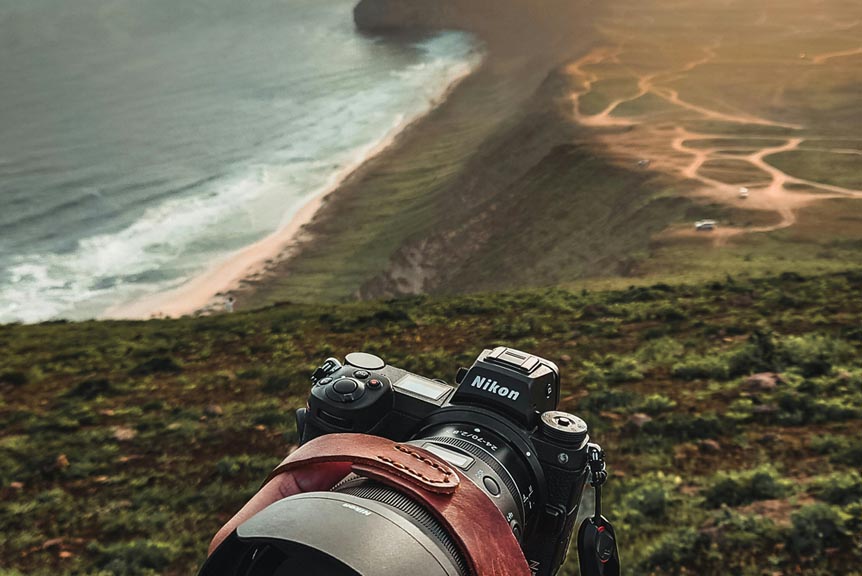
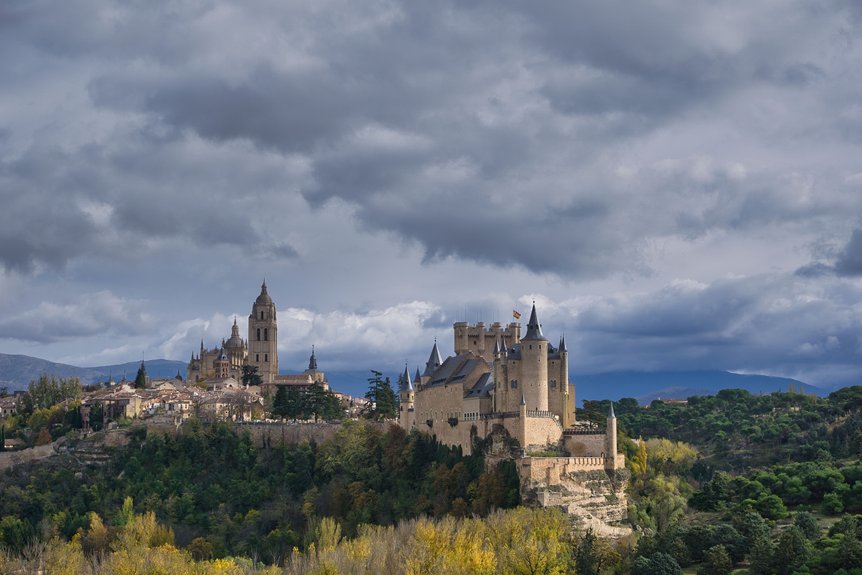
Sweeping mountain vistas and towering cathedral facades demand lenses that capture every detail without compromise. We understand choosing the right wide-angle lens feels overwhelming, given the sheer number of options across different systems and budgets. Whether you’re shooting full-frame, crop sensor, or mirrorless, the right focal length changes everything. We’ve broken down the top performers across each category, so you’ll find exactly what you need to make your next shot count.
Wide Angle vs. Ultra-Wide: Which Focal Length Do You Actually Need?
When selecting a lens for landscape or architecture photography, we need to distinguish between two distinct categories: wide-angle (24–35mm) and ultra-wide (under 20mm). Each focal length serves a specific purpose, and choosing incorrectly compromises your composition.
A wide-angle lens delivers a balanced perspective with minimal distortion, making it ideal for structured architectural shots and controlled landscape photography. It’s reliable when we need natural-looking scene coverage without exaggerated depth.
An ultra-wide lens expands the field of view dramatically, emphasizing vastness, dramatic foregrounds, and tight interiors. However, the ultra-wide-angle perspective introduces distortion that often requires post-processing correction.
We recommend assessing your subject first. If you’re prioritizing accuracy and balance, choose wide-angle. If maximum scene coverage and visual impact matter more, the ultra-wide lens is your strongest tool.
Best Wide Angle Lenses for Full-Frame Cameras
Choosing the right wide-angle lens for a full-frame camera depends on balancing optical quality, aperture, and focal range against your specific shooting demands.
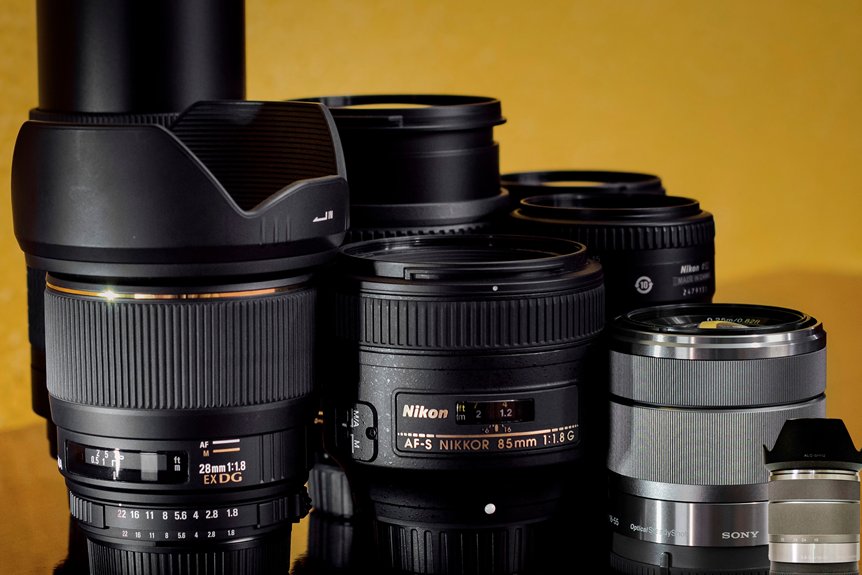
For landscape photography and architecture photography, we recommend evaluating both zoom lens and prime lens options carefully.
The Canon RF 14-35mm f/4L and Nikon Z 14-30mm f/4 deliver excellent distortion control across versatile focal ranges.
If you need superior low-light capability, the Nikon 14-24mm f/2.8 and Sony FE 16-35mm with f/2.8 aperture offer professional-grade optical quality and robust build durability.
For ultra-wide-angle coverage, Sony’s FE 12-24mm f/4 G excels in sharpness and minimal distortion.
Advanced aspherical elements and coatings across these lenses reduce chromatic aberrations, ensuring exceptional clarity whether you’re shooting sprawling landscapes or complex architectural compositions.
Best Wide Angle Lenses for Crop Sensor Cameras
While full-frame options dominate professional discussions, crop sensor cameras demand their own dedicated wide-angle solutions.
For landscape photography and architecture photography, we recommend lenses ranging from 10mm to 16mm, delivering an effective focal length equivalent of 16-35mm on crop sensor cameras.
The Canon EF-S 10-22mm f/3.5-4.5 USM and Nikon 10-24mm f/3.5-4.5G ED stand out for their exceptional distortion control, maximizing field of view without compromising image integrity.
Both lenses maintain strong filter compatibility, which is essential for controlling exposure in demanding shooting environments.
Their compact design makes them particularly valuable for travel and hiking scenarios where weight matters.
When selecting wide-angle lenses for crop sensor cameras, prioritize distortion control, focal length range, and filter compatibility to consistently capture compelling landscape and architectural imagery.
Best Wide Angle Lenses for Mirrorless Systems
Mirrorless systems have transformed wide-angle photography, and manufacturers have responded with optics that outperform their DSLR predecessors in both size and image quality.
We recommend standout wide-angle lenses like the Sony FE 12-24mm F4 G and Nikon Z 14-24mm F2.8 S, which deliver exceptional optical quality, minimal distortion, and remarkable sharpness across their focal length range.
For landscape photography and architecture photography, fast aperture options at f/2.8 or wider provide critical low-light flexibility and precise depth of field control.
Their compact design makes them genuinely portable without compromising performance.
Advanced Nano AR coatings suppress flare and ghosting effectively.
Regarding filter compatibility, we’d note that some lenses, like the Nikon Z 14-30mm F4, accept screw-on filters, while bulbous front elements on other mirrorless systems require dedicated filter holders.
How to Pick the Right Wide Angle Lens for Your Needs
Picking the right wide-angle lens demands that we weigh several interdependent factors against our specific shooting priorities.
For landscape photography and architecture photography, we recommend selecting a focal length between 10–24mm, which delivers the expansive coverage both disciplines require.
Next, we should decide between rectilinear and fisheye designs. Rectilinear lenses control distortion effectively, preserving straight architectural lines, while fisheye optics introduce creative curvature.
Filter compatibility matters considerably—confirm the lens accepts polarizers or graduated ND filters before purchasing.
We must also scrutinize edge performance and sharpness at wider apertures, since soft corners undermine image quality in critical compositions.
Finally, assess build quality and weather sealing relative to our shooting environments. A lens lacking adequate sealing risks failure in the demanding outdoor conditions that landscape and architecture photography routinely present.
Frequently Asked Questions
What Is the Best Lens for Wide Angle Landscape Photography?
We recommend a 16-35mm lens, balancing focal length, aperture size, and minimal lens distortion. Guarantee camera compatibility, weather sealing, and image stabilization. Consider weight considerations, autofocus speed, lens filters, and price range for ideal landscape results.
Is 24MM Wide Enough for Architecture?
We’ve tested thousands of setups—24mm’s focal length is wide enough for most architecture. It handles distortion correction well, but sensor size, aperture range, image stabilization, lens compatibility, low light performance, weight, ease of use, and price range ultimately determine suitability.
What Is the Best Wide-Angle Lens for Architectural Photography?
We recommend tilt-shift lenses like the Canon TS-E 24mm for superior perspective control, distortion correction, and precise focal length management. They deliver exceptional depth of field, low light performance, weather sealing, image stabilization, optimized aperture settings, and minimal lens flare.
What Type of Lens Is Best for Architectural Photography?
We recommend tilt-shift lenses for architectural photography. They offer superior perspective control, minimal lens distortion, and precise focal length management. With controlled chromatic aberration, excellent aperture size, and manual focus capability, they’re unmatched for capturing accurate architectural proportions.
Conclusion
Choosing the right wide-angle lens isn’t just about specs on paper — it’s about finding the tool that transforms your creative vision into razor-sharp reality. We’ve covered focal lengths, sensor formats, and system compatibility so you can make a confident, informed decision. Whether you’re shooting sweeping mountain vistas or towering architectural giants, prioritize optical quality, weather sealing, and distortion control. The perfect lens is waiting — go capture something extraordinary.
Before You Buy
Lens prices change frequently — we recommend checking current pricing before purchasing. Find all the gear mentioned in this article on Amazon and Adorama.
Keep Reading:
Best Travel Zoom Lenses for All-in-One Photography →
Best Travel Tripods That Fit in a Carry-On Bag →
Our Full Travel Photography Gear Guide →
Get the Free Europe Photography Packing Checklist
Everything we pack for a 2-week photography trip across Europe — free when you subscribe.
No spam, ever. Unsubscribe anytime.